
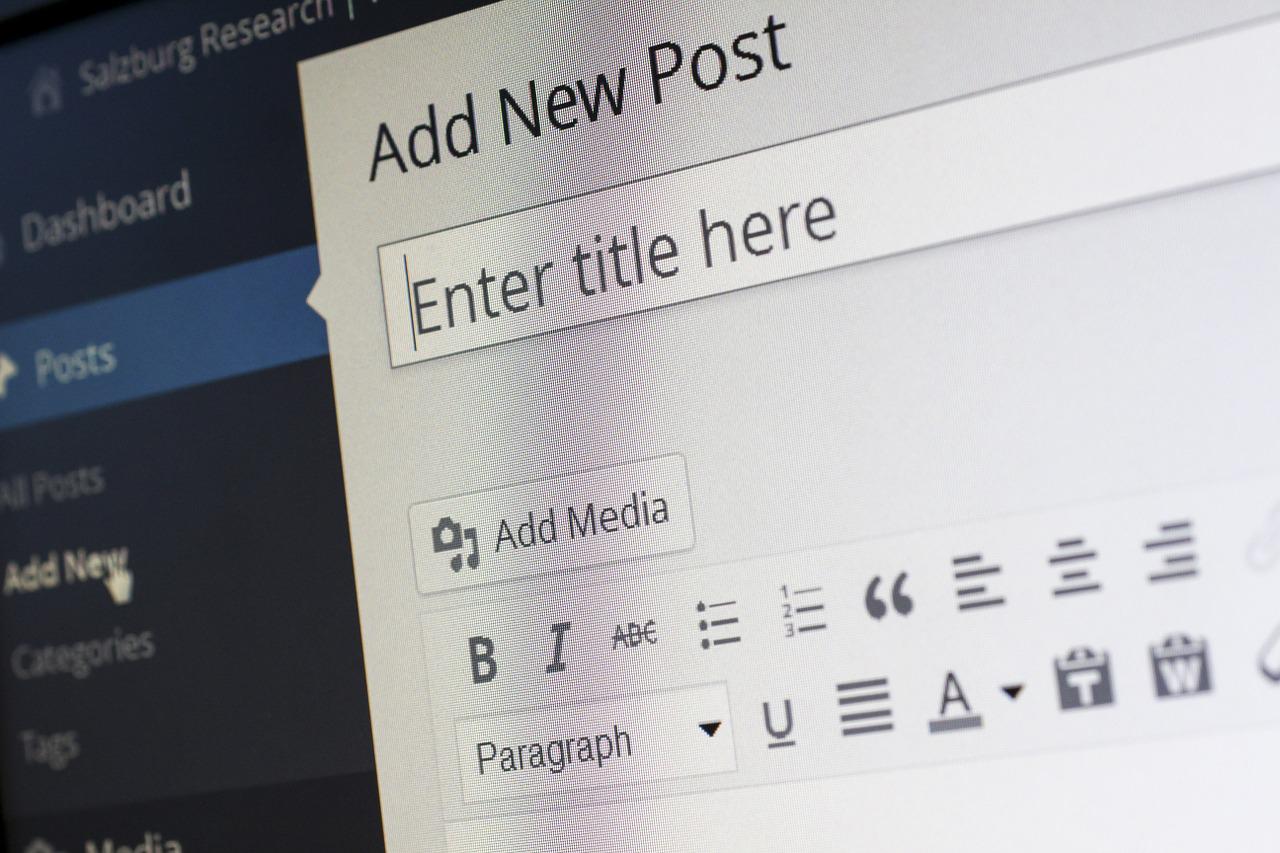
The blog feed on your website is a very powerful channel, as it is often the primary area of your website that is constantly (hopefully) being updated. It is therefore one of the key pages that is going to be crawled by search engines more regularly.
As Google’s algorithm sees new versions being introduced to improve its user experience, it is critical for businesses to ensure that blog pages are being utilised to best effect. That is to say, adding value to the user.
In this post, St Albans PR agency, Blackbird, takes a look at how you can maximise the impact of your blog content and avoid some of the most common pitfalls:
Avoid keyword stuffing
Years ago when Google’s search algorithm was less sophisticated, keyword stuffing was a common practice that enabled web users to increase rankings for a given keyword by literally ‘stuffing’ their website content with it.
This is no longer the case and overuse of any given keyword in your website’s content is likely to be considered as spam by Google. As a result, ranking performance would be seriously compromised by taking this approach and you could find that your website is penalised by not even being displayed in search results.
Google now ranks websites for their credibility and authority, based on user experience, peer to peer links, currency and relevance, so your content needs to reflect this.
To create content that targets your keywords effectively yet still provides a good user experience, you must write with your audience in mind. If you’re writing a piece based on keyword research that is relevant to your business and its audience, you’ll be able to naturally incorporate your key terms into your content. Try to focus on one or two similar keywords per blog and only use them when they’re relevant.
Have an internal linking strategy
When creating new blog content, it’s important to link out from this to your other relevant pages, as well as adding links to your new content.
Firstly, adding links from your new blog content to your other priority pages improves the user experience and journey through your site. You can link out to other blog content with related information, or link to a product or service that could help solve a problem.
Secondly, when adding any type of new content to a website, it’s important that Google can find it easily. The quicker you can get your content crawled, the faster you can rank. An effective way of doing this is by linking your new blog content from your high-performing pages. For example, you might have another resource on your website that gets a good amount of organic traffic already, and by linking to your new blog from this page, your users and Google will be able to find it easily.
When sourcing and implementing internal links, it’s vital to consider the anchor text you’re using. This is the text within the copy that your link is added to. All anchor text pointing to a specific page should be relevant to what the page is about but not identical. For example, if all links to your new blog content are linked using anchor text such as ‘click here’ or ‘find out more’, this is not making it easy for Google to understand what your blog is about. Similarly, if every single link pointing to your blog content uses identical anchor links, this may look unnatural to Google. So it’s good practice to mix it up.
Promote related articles
Producing blog content is a great way to increase your organic visibility, but in most cases, you’re targeting people who may not have heard of your business. Naturally, blog content has a high bounce rate. This means that people land on your page, find what they need and leave quickly. To make new content encourage conversions, you should direct users to different areas on your website, such as signposting related content. You’ll find that a lot of blogs have a ‘related articles’ or ‘you may also be interested in’ section at the bottom, which benefits both SEO and user experience. If not, you can link these directly within each post.
Here’s an example of a related Blackbird post that looks at tips on getting your messaging right
Target the right search intent
To understand what kind of content visitors to your website are looking for and therefore optimising the right keywords, we need to understand what the reason is behind their search. There are, typically, three types of search intent:
Informational
These tend to make up the majority of searches, with users looking for informational content that answers a question or to learn about a certain topic.
Navigational
These searches are when a user is looking for a specific brand or website. They already know what company they’re looking for and they use the brand name in their search.
Transactional
Transactional searches have the most commercial intent. These are people looking for products or services, but without knowing where they’re going to buy from. The search results for terms like these will typically be commercial pages where a user can purchase a product or service. For example: “PR agency service in Hertfordshire.”
Matching your content to the search intent is crucial; there’s no point creating a blog post targeting a transactional term as you’re unlikely to rank, and even if you do, you won’t engage users as you’re not providing them with the results they want.
Most people who read your blog won’t become a customer and that’s just reality. However, there are things that can be done to grab your reader’s attention and get them to re-consider your business when they are ready to buy. For example, different blog posts can be positioned at different points of the marketing funnel, to respond and influence a different point in the user journey, starting with identifying a problem, before researching options for solutions.
Here are some examples of tactics:
Top of the funnel
- Newsletter subscription
- Links to other blogs
Middle of the funnel
- Videos
- Whitepapers
- Downloadable resources
Bottom of the funnel
- Sales
- Trials
- Enquiries / contact forms
Blog content is a highly effective way of increasing your organic traffic and getting new users to your site, but it’s important to do it right. High-quality content is consistently rewarded by Google, so ensure you write with the user in mind. If you would like to discuss this in more detail, you can book in a chat with us HERE
Comments are closed.