
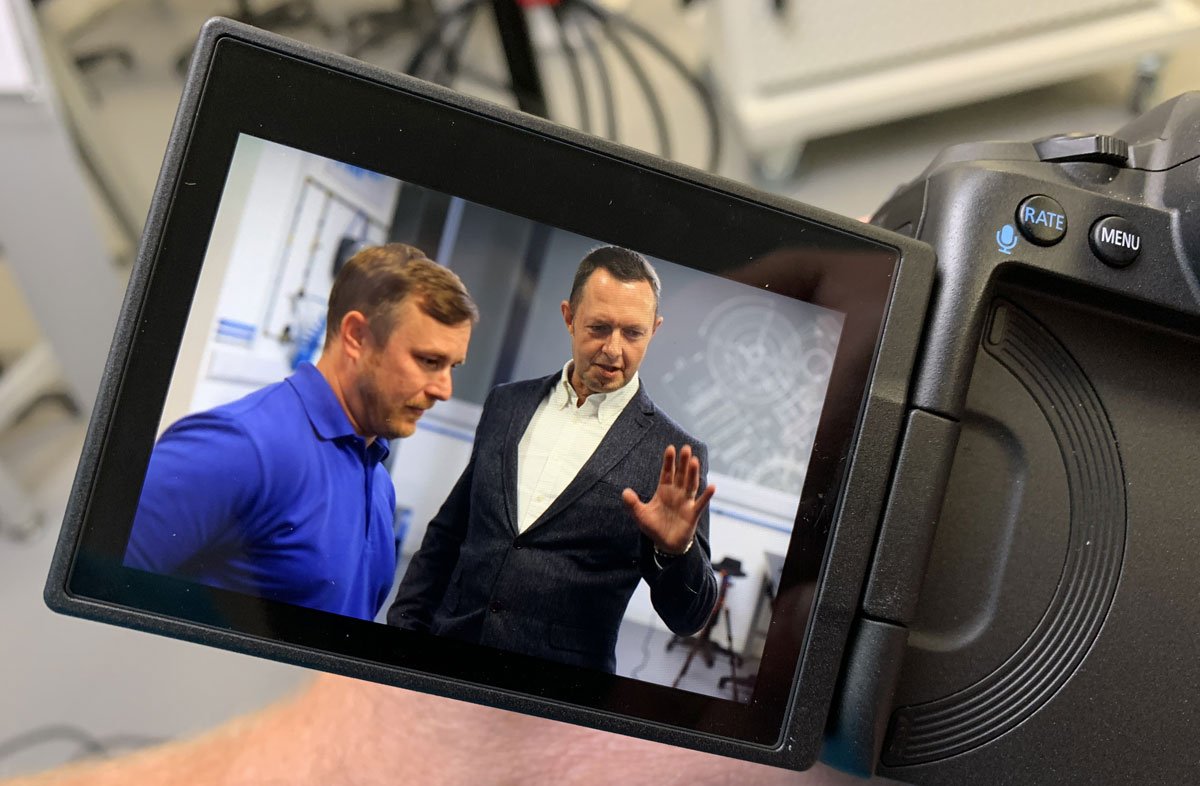
Professional media training is a service provided by Hertfordshire PR agency, Blackbird, to enable company spokespeople to come across as personable, credible, authoritative and knowledgeable in print, radio and TV interviews. In this blog, we’re please to share our Top 10 tips for a successful media interview.
1 Analyse your audience
A media interview is nearly always your opportunity to promote your business. Even under challenging circumstances, if properly handled, you can turn a potentially negative situation to your advantage by controlling the message. Remember, whilst it’s helpful to connect with the journalist, he or she is only the means to communicate with the audience. Identify the key concerns of the people you are trying to influence. It might be prospective clients, other stakeholders, those from a rival company, or even policymakers. However, you also have to be interesting, otherwise the journalist might not wish to discuss what you have to say.
2 Identify 3 key messages
Before you do anything else, decide what you want to have reported. Try to cut through all of the extraneous material, so that you’re left with three key messages. These should be short, clear and simple. This number will enable you to keep on track within the allotted time of an interview (normally no longer than 3 minutes) and is a way of evaluating afterwards whether or not you achieved your messaging objective.
3 ‘Sizzle’ your key messages
At a standard speed of three words per second, when you speak you’re going to end up saying a lot. So, draw attention to your key messages by making them distinctive. This can be done via metaphor, simile, tricolons (the power of three), contrastive pairs (see-saw phrases), rhyme, rhythm, alliteration, etc. It may help to think of these phrases as the headline of an argument.
4 Provide supporting evidence
Speaking powerfully is good but you also need to appear as credible. Numbers and statistics provide the best possible ‘hard proof’ that what you are saying is true. Prefer fractions to percentages (‘half’ rather than 50%), be comfortable rounding them up or down (‘almost three quarters’ rather than 74.83%) and don’t have too many of them. Again, 3 sets is enough.
5 Paint a metaphorical picture
Stories, anecdotes and examples stick in the mind and offer ‘soft’ evidence of what you are trying to say, as well as checking understanding. They are a highly effective way of helping your interview to stay in the memory after the journalist has finished speaking to you. Try to bring them to life by adding interesting details that will paint a picture in the audience’s mind.
6 Speak conversationally
Spoken communication should use colloquial words and phrases so you come across well. Avoid jargon. Journalists hate phrases which are vague, abstract and imprecise. In addition, allow the natural rise and fall of conversation (‘Standard Intonation’), so you know the points for emphasis. As a general rule, avoid using the language of their question to frame your answer. Often journalists will feed you interesting language to get a better quote. This may mean you end up giving more ‘extreme’ quotes than you would have chosen.
7 Maintain eye contact
The simple rule for TV interviews is that if you are in front the journalist, look at them, not the camera. If you can only hear them (in an earpiece from a remote studio) then look directly into the camera lens instead. But even in a radio or newspaper interview, it’s worth keeping good eye contact with the journalist, to help with the ‘BLT’ factor, which is getting the audience to Believe, Like and Trust you.
8 Anticipate negative questions
Accept that an interview with a journalist is not an advertising opportunity. They are not there to help you promote your company or product and you should avoid trying to do so. Their questions are likely to be robust and challenging. So predict difficult questions in advance and make sure you have your responses ready. They will often be ‘open’ questions, which cannot receive ‘yes’ or ‘no’ as an answer., For example, starting with ‘Who, What, When, Where, Why, How and How Much?’
9 Bridge to your key messages
Some questions will allow you to get to your prepared key messages without any effort at all. Treat these questions as a gift and deliver your messages powerfully and memorably. But others will need more work. In such cases, acknowledge and respond to the question quickly, before using a bridging word or phrase to get to the messages you had planned to deliver anyway. Remember, it’s your job to land your messages as well as to answer questions.
10 Be animated
One of the biggest sins in communication is to be boring. People switch off quickly both metaphorically and literally. Don’t fake it but be the best version of yourself. Put energy and dynamism into your conversation to keep things lively and ensure others remain engaged with what you are saying. Remember, the journalist wants you to be good too as it makes their job more interesting and it’s your interview so make it work!
To discuss media training for your business, get in touch with us.
Comments are closed.